
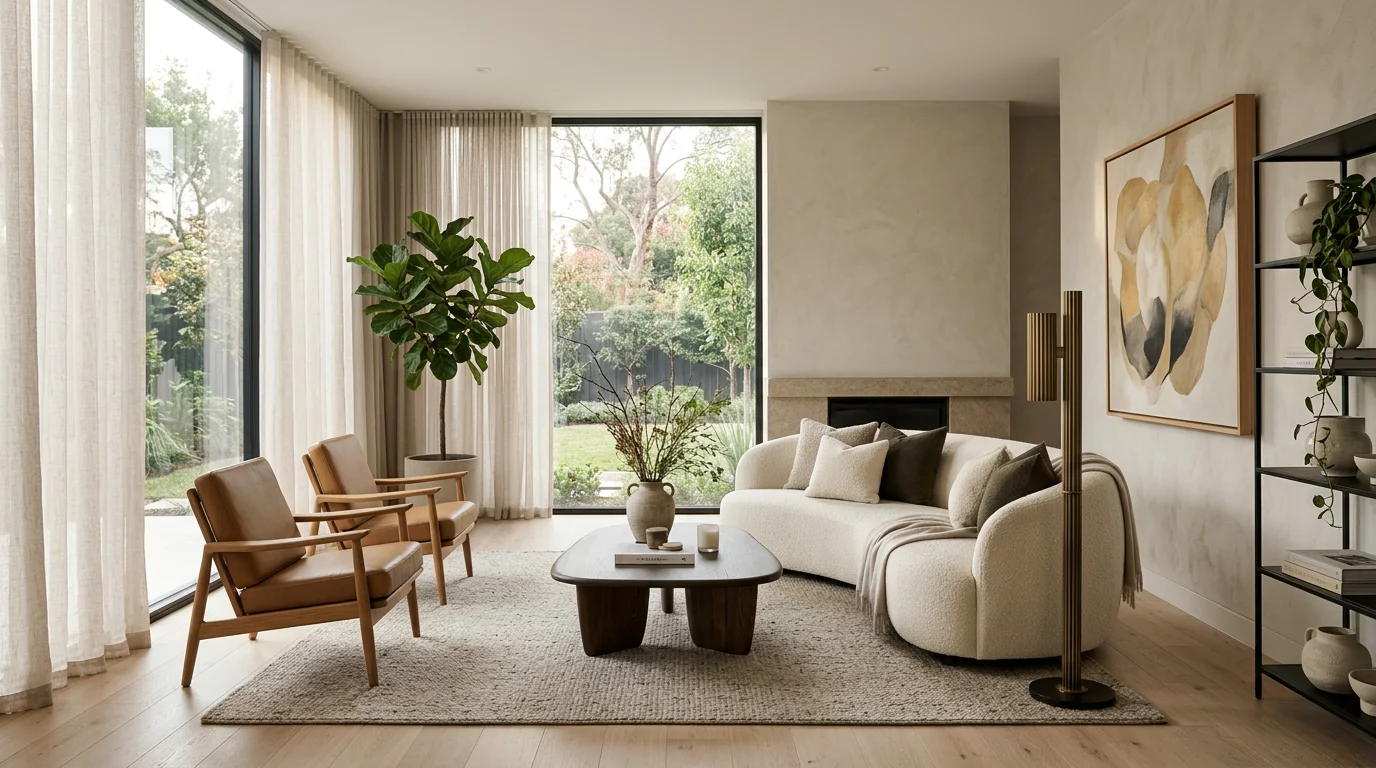
Curved furniture is still relevant in 2026, but the trend is moving away from rooms filled with exaggerated curves. Softer corners, rounded backs, oval tables, and one sculptural anchor piece are easier to live with and easier to combine with furniture you already own.
The 1stDibs 2026 trend survey found that 43% of surveyed designers identified curvy or irregular furniture as a trend. That shows continuing interest, not a rule that every room needs a curved sofa.
The useful question is personal
Do not ask only whether curved furniture is fashionable. Ask whether this particular piece looks right with your room. DecorViz is built to answer that second question.
What the Curved Furniture Trend Includes
Curved furniture is broader than the dramatic crescent sofa seen in editorial interiors. The trend includes barrel chairs, rounded headboards, kidney-shaped desks, oval dining and coffee tables, waterfall-edge consoles, softened cabinet corners, and modular seating arranged in an arc.
Its roots are not new. Rounded furniture appeared across Art Deco, mid-century modern, and postmodern design, among other periods. The current version often combines those sculptural forms with quiet colors, tactile upholstery, warm wood, stone, and simple rooms. That history is one reason the best curved pieces can outlast a short trend cycle.
Subtle curves
Rounded corners, softened arms, and oval tops add ease without dominating the room. These are usually the safest long-term choice.
Sculptural curves
Crescent sofas, asymmetrical tables, and continuous-loop chairs act as focal points and need more visual space around them.
Modular curves
Sectional pieces can create a partial arc or serpentine layout. They offer flexibility, but every module and connector should be checked before purchase.
Why the Curved Furniture Trend Is Hard to Judge Online
A curved piece changes more than one corner of a room. It changes the direction your eye follows, how much floor remains visible, and how nearby straight edges feel. A sofa photographed in a large studio may look light and elegant, then feel visually heavy beside a short wall or a rectangular media unit at home.
Shape relationship
A rounded sofa can soften a room full of grids. In a room with arches, round rugs, and circular lighting, the same sofa may feel repetitive.
Material and light
Boucle, velvet, leather, and wood respond differently to your daylight and wall color. A cream product photo can read warmer or grayer at home.
Visual weight
Deep seats, low backs, and continuous curved bases can make a piece feel larger than its outline suggests. Dimensions still matter, but they do not show the full visual effect.
Use DecorViz to Test the Actual Curved Piece
DecorViz does not generate a generic curved sofa and ask you to imagine the rest. You provide the room photo and the product image for the item you are considering. DecorViz creates a realistic preview of that product in your room with lighting, perspective, depth, and shadows adjusted to the scene.
Upload your room photo
Use the room as it looks today. Existing furniture, flooring, walls, and daylight give the preview useful context.
Add the product image
Save a clear image of the curved sofa, chair, coffee table, dining table, or cabinet from almost any retailer.
Generate and compare
Review the piece inside your room. Then use the same room photo with a straighter alternative, another color, or another material.
Compare the trend in your own room
Use one room photo and two product images to compare a curved option with a straight-lined alternative.
How to Style Curved Furniture
Curved furniture is usually easiest to live with when the shape creates contrast instead of becoming the theme of the entire room. Treat one curved item as an anchor, then give it enough straight lines and open space to remain distinctive.
- Choose one main curve. Start with the sofa, dining table, coffee table, or headboard. Let other large pieces stay simpler so the focal point remains clear.
- Balance round and straight forms. A rectangular rug, linear media unit, grid shelving, or straight window wall can give a curved sofa useful structure.
- Watch the space behind the curve. A crescent sofa may leave pockets of unused floor beside a short wall. Measure those areas and decide whether they will look intentional.
- Mix materials as well as shapes. Soft upholstery can sit well beside wood, stone, glass, or metal. Repeating the same rounded shape and texture everywhere can make the room feel overly coordinated.
- Choose the piece beyond the trend. Ask whether you would still want its comfort, material, and silhouette if curved furniture stopped appearing in trend reports.
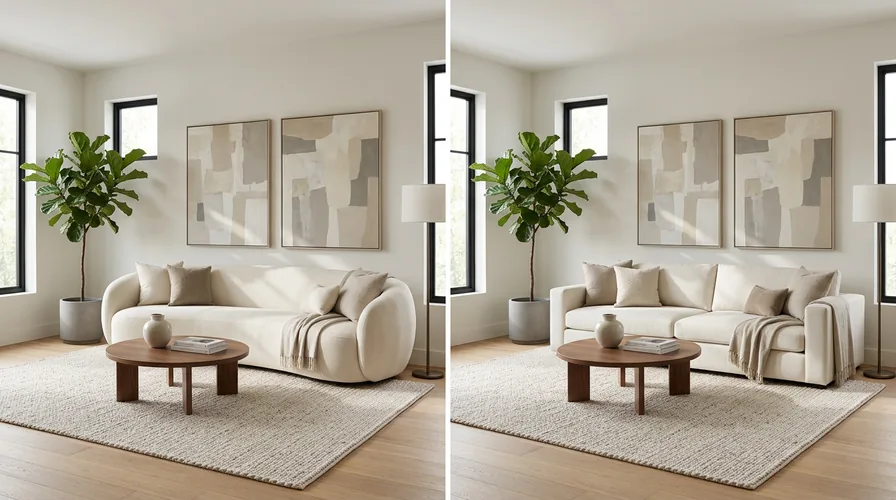
Keeping the room consistent makes the visual effect of the curved and straight silhouettes easier to compare.
This is an especially useful DecorViz comparison. Keep the room photo constant, generate one preview for each product, and judge the shape without changing the surrounding context.
Four Situations Where Curved Furniture Works Well
1. One curved anchor in an angular room
A curved sofa or kidney-shaped coffee table creates contrast when the architecture and most furniture use straight lines. Let the curve be the focal point instead of repeating it everywhere.
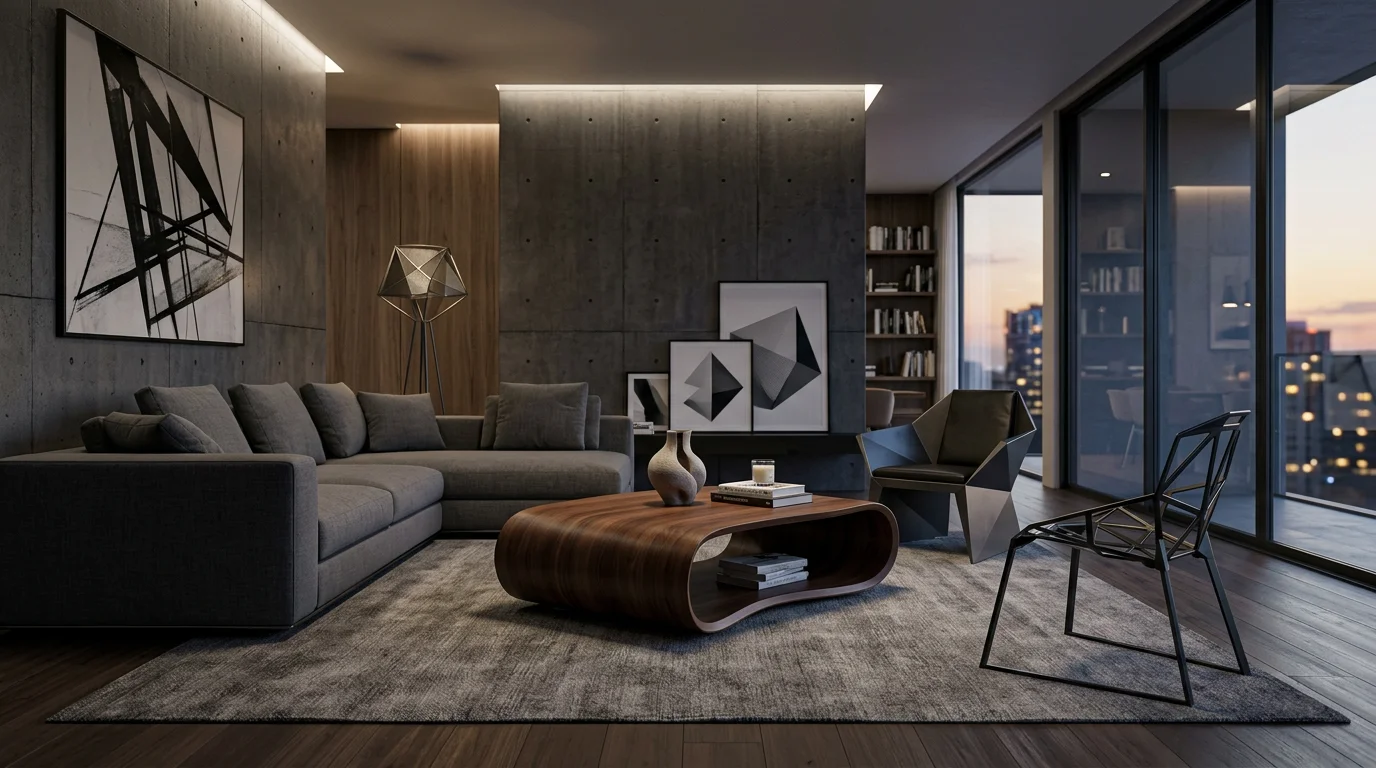
One rounded table can introduce movement without making the entire room trend-dependent.
2. Soft upholstery beside hard surfaces
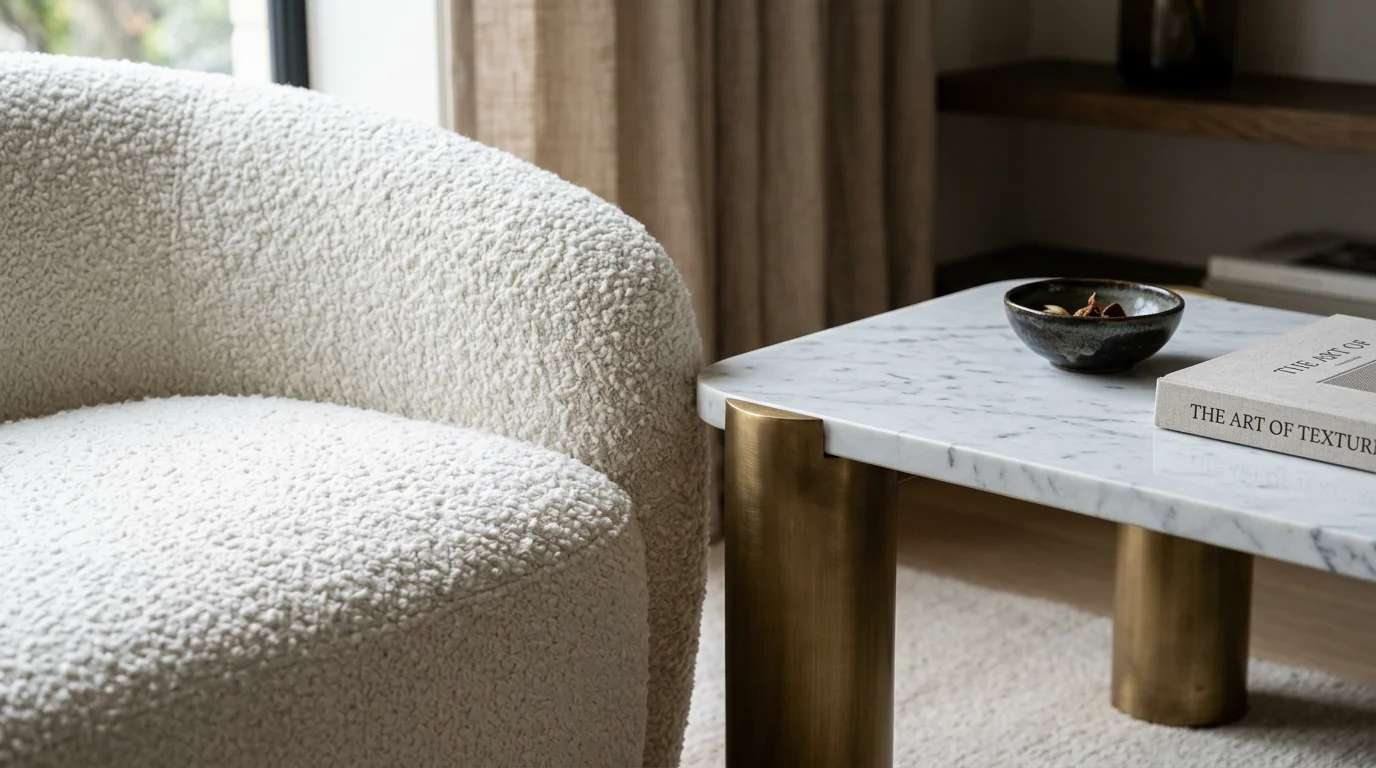
Curved boucle or velvet seating can balance stone, glass, metal, and built-in cabinetry. The contrast comes from both shape and texture.
3. A social seating arrangement
A gently curved sofa or rounded-back chairs can turn attention toward the middle of a seating group. This is useful when conversation matters more than arranging every seat toward a television.
4. Natural materials and restrained curves
Rounded wood edges, woven chairs, and oval tables tend to age more quietly than highly sculptural statement pieces. They introduce softness without asking the whole room to follow one aesthetic.
Materials Change How a Curved Piece Feels
Shape attracts attention first, but material often determines whether the furniture feels calm, glamorous, casual, or visually heavy.
Boucle and textured fabric
Texture emphasizes softness and hides some seams, but pale looped fabrics may need more maintenance in busy homes.
Velvet and smooth upholstery
Light moves across the curve and can make the silhouette more dramatic. Directional pile and strong color may also reveal pressure marks.
Leather
Leather gives a rounded form more structure and can develop character with use. Large continuous curves make material quality and seam placement especially visible.
Wood, stone, glass, and metal
Hard materials create cleaner outlines. Check edge thickness, base stability, weight, and maintenance as carefully as the silhouette.
Use DecorViz to compare how the visible color and finish relate to your room, then use retailer specifications, samples, and reviews to evaluate construction and care.
When Straight Lines May Work Better
The wall position is visually tight
A pronounced curve can leave awkward-looking gaps beside a short wall, media unit, or built-in cabinet.
You want to stretch out
Some sculptural curved sofas prioritize silhouette over a long, uninterrupted seat. Comfort and daily use should outrank the trend.
The room already has rounded elements
Arched openings, round rugs, globe lighting, and curved furniture can compete. A rectangular piece may provide needed structure.
The product image hides the shape
If the retailer only shows a front view, the depth and sweep of the curve may be unclear. Look for an angled product image before generating a preview.
Can Curved Furniture Work in a Small Room?
Yes, but the footprint matters more than the label. A compact barrel chair or oval side table can remove sharp corners and make circulation feel smoother. A deep crescent sofa can consume usable floor area even when its width looks reasonable.
- Compare the product's maximum width and depth, not only the straight-line seat width.
- Leave visual breathing room around a sculptural curve instead of forcing it tightly between other pieces.
- Choose raised legs, a lower back, or a lighter finish when you want more floor and wall to remain visible.
- Mark the footprint on the floor and walk around it before ordering.
A DecorViz preview helps reveal visual crowding in the real room photo. A measured footprint confirms whether the circulation actually works.
Curved Furniture by Room
Living room
Start with the main purchase: sofa, sectional, accent chair, or coffee table. Preview one product at a time so you can see whether its shape connects with the rug, media unit, and surrounding furniture. Explore the sofa visualizer, sectional visualizer, or coffee table visualizer.
Dining room
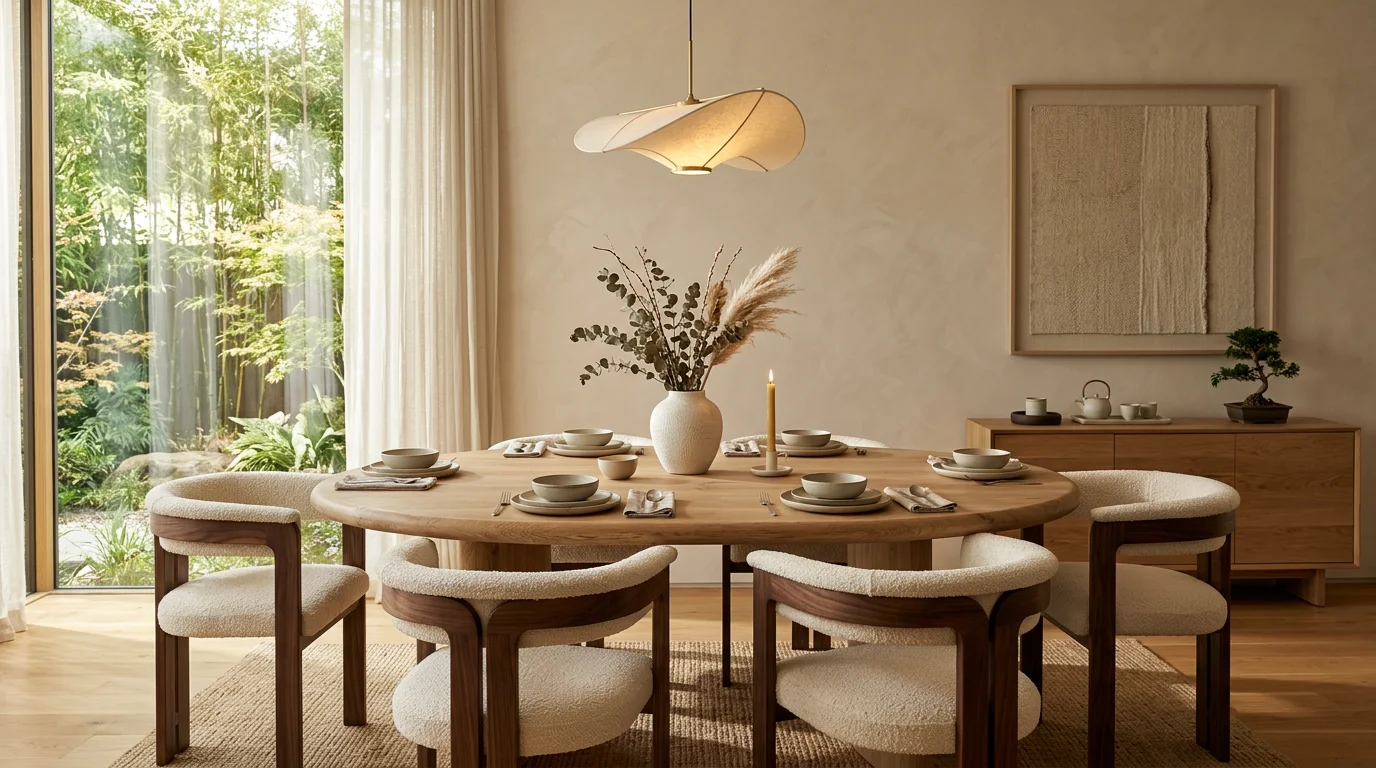
Round and oval tables change both the room silhouette and the relationship between chairs. Use the dining table visualizer to compare the actual products you are considering, then confirm all physical clearances with measurements.
Bedroom
A curved headboard can soften a room without changing every other piece. Preview the bed against your wall color, bedding, and nightstands with the bed visualizer.
Home office
A rounded desk edge or barrel chair can make a work area feel less institutional. Keep storage practical and use the home office chair visualizer for the product decision.
Get a More Useful DecorViz Preview
- Use an angled product image. It reveals the depth and side profile of a curved piece better than a straight-on catalog photo.
- Keep the room photo level. Severe tilt and extreme wide-angle distortion make perspective harder to interpret.
- Show the floor and nearby furniture. Context helps the generated result feel grounded in the room.
- Compare one variable at a time. Test curve versus straight, or boucle versus leather, while keeping the room photo consistent.
- Measure before ordering. DecorViz helps with visual confidence. It does not replace product dimensions, doorway checks, or a tape measure.
Frequently Asked Questions
Is curved furniture still in style in 2026?
Yes, especially when the curve is restrained and useful. Rounded backs, softened corners, oval tables, and one sculptural piece are easier to combine with an existing room than a full set of exaggerated curves.
Are curved sofas going out of style?
Curved sofas are not disappearing, but the most exaggerated shapes may be harder to use and may date faster. A restrained curve, practical seat, and durable material can remain appealing beyond the current trend.
How do I know if a curved sofa will suit my room?
Consider the existing lines, colors, materials, and visual weight in the room. DecorViz can place the product image into your room photo so you can judge those relationships before buying.
Can DecorViz tell me whether the furniture will physically fit?
No. DecorViz creates a realistic visual preview, not a measurement or exact-scale guarantee. Always check product dimensions and measure the intended location.
Can I compare curved and straight furniture in the same room?
Yes. Use the same room photo for separate DecorViz generations with different product images. This creates a clearer visual comparison between the options.
See the piece in your room, not only in a trend report
Upload your room photo and the curved furniture product you are considering.
Related guides: how to change furniture in a photo with AI and free AI furniture placement.