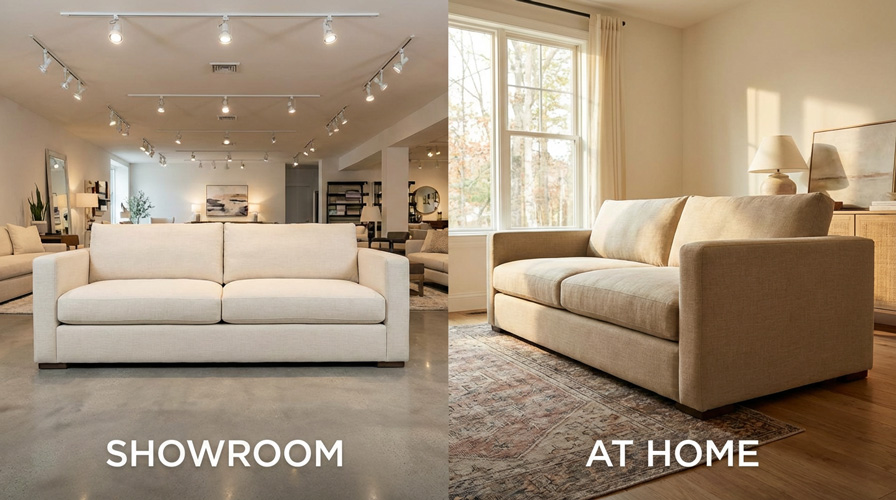
You loved the furniture in the store. Then it arrived. And something felt off. Not broken. Not ugly. Just wrong. This feeling is the root of most furniture regret, and it happens because you're comparing a controlled environment (the store) to a complex one (your home).
The Core Problem: Context
Showrooms and product photos are controlled environments designed to flatter the product. Your home is not, and that difference in context changes how furniture looks, feels, and fits.
1. Showrooms are Designed to Make Furniture Look Perfect
Furniture stores are not neutral spaces; they are engineered environments. Every element, from the wall color to the placement of accessories, is chosen to maximize the appeal of the product.
Controlled Lighting
Directional lights reduce harsh shadows and make materials look richer and more vibrant than they will under standard home lighting.
Neutral Backdrops
Walls and floors are often painted in neutral tones to ensure fabrics and wood tones read "clean" and consistent, without clashing with existing decor.
Generous Spacing
Showrooms use significantly more empty space around furniture. This makes pieces feel lighter and less imposing than they will in a typical apartment.
2. Lighting Changes Everything (Especially Color)
Lighting is the number one reason furniture feels different at home. Bulb temperature, window direction, and time of day all change how fabric, wood, and finishes read.
Warm vs Cool Bulbs
Warm light (yellowish) can make a gray sofa look beige, while cool light (bluish) can make a beige sofa look gray.
Natural Light Direction
North-facing windows cast a cool, blue light; South-facing windows cast a warm, yellow light. This dramatically affects color perception.
Shadows and Depth
The lack of professional, directional lighting at home can make furniture look flatter or heavier due to harsh, unflattering shadows.
3. Your Room Already Has a Visual Personality
Rooms aren't blank canvases. They already contain color temperature, style cues, visual weight, and rhythm from your existing furniture, walls, and flooring. New furniture either supports that existing personality or fights it.

Even small undertone differences in wood or paint can change the entire feel of a room.
4. You're Misjudging Visual Mass, Not Just Size
This is why furniture feels “too big” even when measurements are correct. People often misjudge visual mass, which is the perceived weight of an object.
Dark colors, low-to-the-ground designs, bulky arms, and low ceilings all contribute to a piece feeling heavier and more dominant than expected, even if it technically fits the space.
5. Online Photos Add Another Layer of Distortion
Product photos are optimized for appeal, not accuracy. Wide-angle lenses exaggerate space, bright lighting shifts color, and styling can hide true scale. When you combine this with your home's unique context, the difference can be shocking.
The 5-Point Regret Checklist (How to Avoid Costly Mistakes)
Your Pre-Purchase Sanity Check
- Check Bulb Temperature: Know if your room lighting is warm (2700K–3000K) or cooler (4000K+).
- Identify Undertones: Note the undertones of your walls and floors (warm, cool, or neutral).
- View in Context: Use a visualization tool to see the piece in your room during daylight and at night.
- Compare Options: Never judge from a single product photo. Compare 2-3 options side-by-side.
- Measure Visual Mass: Consider the piece's height, depth, and color, not just its width.
The practical rule is simple: If you're unsure, assume it will look different at home, and plan for a visual check before buying.
Where Realistic Visualization Tools Help
Tools that preview furniture in your real room help bridge the gap between showroom fantasy and home reality. They are not for perfection, but for answering the most important question: does this feel right here?
If you're looking for a practical approach, learn how to visualize furniture in a real room before making your purchase.
Want to sanity-check a piece before you buy?
Use a room photo + a product image to preview how it fits visually in your space and avoid furniture regret.
FAQ
Why did my furniture look better in the store?
Stores control lighting, spacing, and surrounding colors to flatter the product. Your home context changes everything, often making the piece look different than you remember.
Is this more common with online purchases?
Yes. Product photos can distort color, texture, and scale, and then your home lighting shifts it again. This double distortion makes online purchases the riskiest.
Why does wood tone look different at home?
Wood reflects surrounding colors and changes under different light temperatures. Warm bulbs can push it orange; cool light can mute it, leading to an unexpected color clash.
For insights on why Pinterest rooms don't work in real apartments, see our guide on why Pinterest rooms don't work in real apartments.
Furniture disappointment rarely comes from bad taste. It comes from buying without seeing it in your real context.