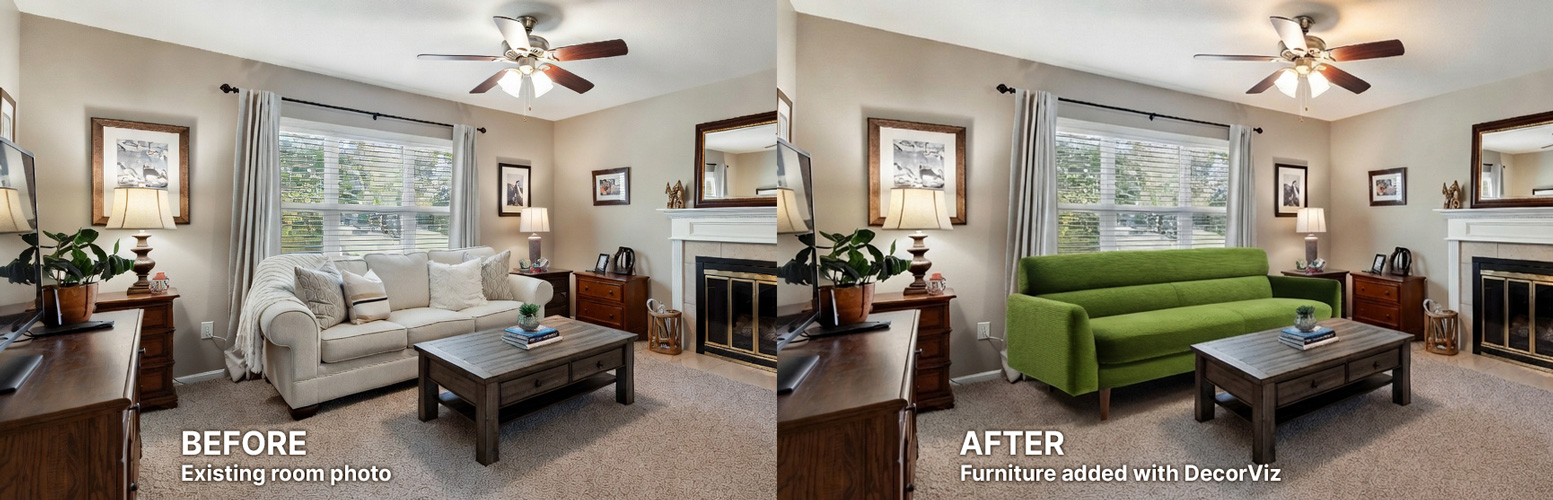
The biggest mistake shoppers make is confusing fit with style. Most "visualize in your room" tools are designed to answer: "Does it fit?" but not the more critical question: "Does it look right in my home?" This guide focuses on achieving style compatibility and visual confidence before you commit to a purchase.
Quick definition: Realistic Visualization
This means seeing an item in your space with believable lighting, accurate color harmony, and a seamless style match, not just a rough estimate of scale.
Understanding why furniture looks different at home than in stores is the first step. Many shoppers also compare traditional AR furniture apps vs realistic visualization approaches to find the best tool for their decision-making process.
Why traditional visualization tools fail the "look right" test
Product photos are staged, lighting is controlled, and your room has its own unique colors, shadows, and style rules. Traditional tools struggle to bridge this gap, leading to expensive returns.
Retailer 3D Viewers
Limited to the retailer's catalog and rarely matches your room's unique lighting or existing style elements.
AR Placement Apps
Excellent for rough scale, but poor for realism. The furniture often looks "floating" or has inaccurate shadows and textures.
Interior Design Inspiration
Great for ideas, but not a decision tool. It's someone else's room, often professionally staged and lit.
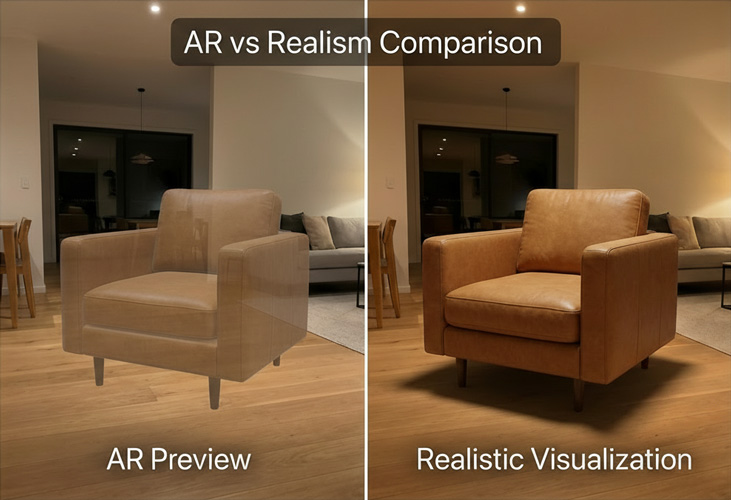
The difference between checking "fit" and confirming "match" is crucial for avoiding regret.
The real goal: Visual Confidence and Harmony
In practice, shoppers want confidence around harmony: color, materials, vibe, and whether the item belongs in the space. This is what prevents costly mistakes.
Style Match
Will the new piece clash with my existing decor, or will it elevate the room?
Color & Material Harmony
Does the wood tone, fabric, or finish feel right under my home's unique lighting?
Real Lighting Integration
Bright studio photos lie. A realistic preview must account for your room's actual shadows and light temperature.
Comparing Your Furniture Visualization Options
Method 1: Retailer 3D Tools
Web-based viewers often tied to a single brand's inventory.
Best for: Quick browsing
Weakness: Context, realism, and cross-shopping
Method 2: AR Placement Apps
Uses your phone's camera to overlay a 3D model in real-time.
Best for: "Will it fit here?" (Rough scale)
Weakness: Lighting, material realism, and style harmony
Method 3: DecorViz (Realistic Visualization)
Uses AI to integrate a product photo into a photo of your room, matching light and context.
Best for: "Does it belong?" (Style confidence)
Strength: Contextual realism and harmony
How DecorViz Works: Achieving Realism in 3 Simple Steps
Upload a real photo of your room
Use a photo taken in normal lighting. The AI uses your room's existing light and shadows as the foundation for realism.
Add the furniture you're considering
Use a product photo or link from any store or brand. DecorViz is not limited to a single catalog.
Get a realistic, contextual preview
See how the piece integrates visually with your room's colors, lighting, and vibe, removing the guesswork from your purchase.
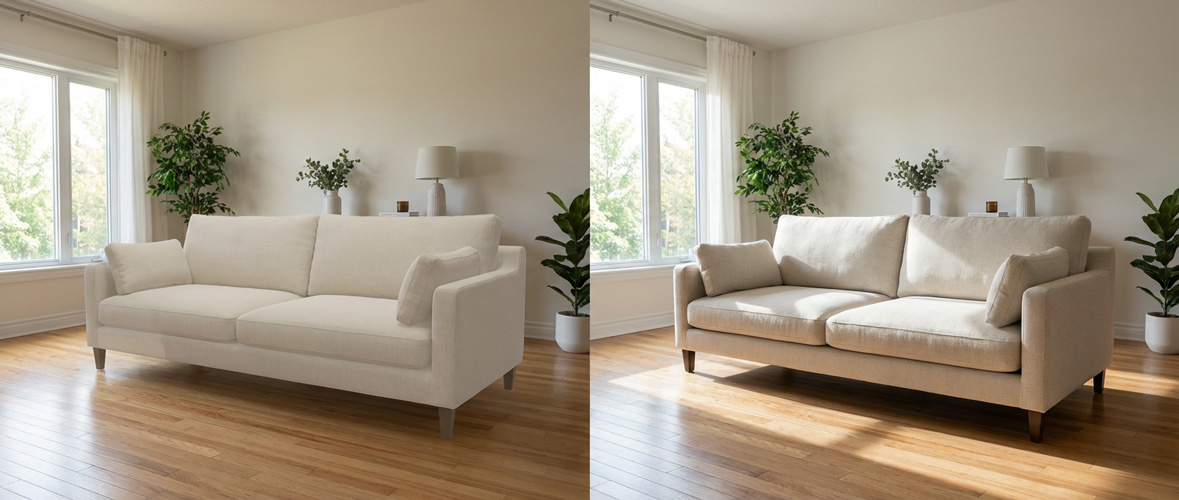
The goal is to make the new piece look like it was always meant to be there.
Ready to test a piece in your room?
Upload your room photo and a product photo to see if it truly matches your space before you buy.
Actionable Visualization Checklist for Best Results
Follow these quick tips to ensure your visualization is as accurate and helpful as possible:
Use a Straight-On Room Photo
Wide shots work best. Avoid extreme wide-angle or fish-eye lens photos if possible, as they can distort perspective.
Pick a Clean Product Image
The clearer the product photo (front view, good lighting, minimal background clutter), the better the AI can integrate it.
Compare Multiple Options
Run 2–3 variations of the furniture piece. Seeing them side-by-side makes it easier to choose what looks natural, not just what looks "trendy."
FAQ: Realistic Furniture Visualization
Can I visualize furniture from any store?
Yes. Unlike retailer-specific AR apps, DecorViz works with any product image you can provide (a screenshot, a product page link, or a photo).
Is this for exact measurements and scale?
DecorViz is primarily for style match and visual confidence, not centimeter-perfect sizing. For exact measurements, you should always consult the product's specifications.
Why do AR previews sometimes look fake?
Real-time AR struggles with complex lighting, shadows, and material reflections. This often results in the furniture looking like it's "floating" or poorly integrated with your real room.
For insights on why inspiration rooms don't work in real apartments, see our guide on why Pinterest rooms don't work in real apartments.
If you found this page because existing "see it in your room" tools weren't helpful, you're exactly who DecorViz was built for.